Why should you choose poultry farming?
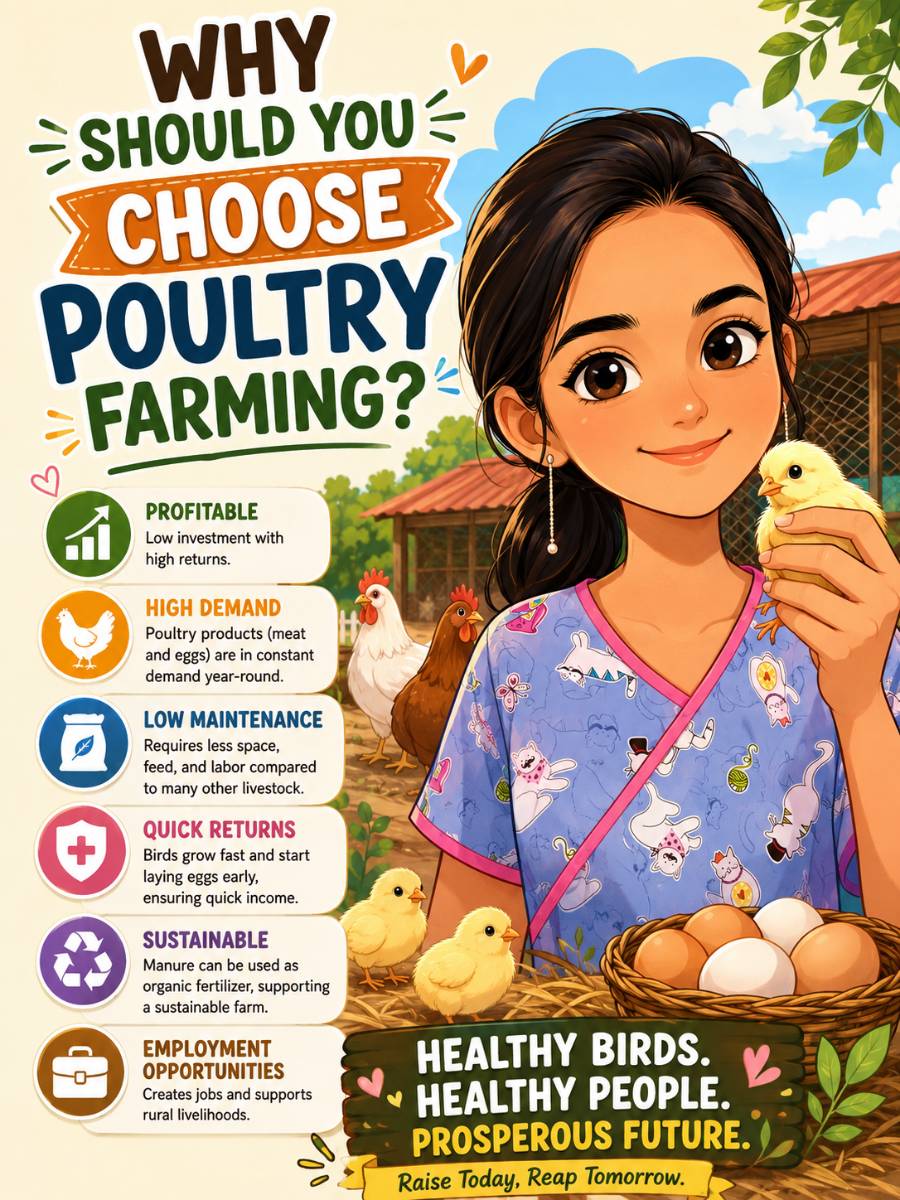
Currently accounting for 40 per cent of the global meat production, poultry production is one of the major stakeholders in the meat industry. There has been an expansive growth in East Africa over the past decade with over 75% of rural households rearing indigenous poultry birds. Poultry farming can comprise of rearing of chickens, quails, ducks, emus or ostriches. The species and breed reared depends on the market and demand, available space and possible investment by the farmer. In many places poultry farming is done primarily to sustain the nutritional requirements of the family with extra surplus distributed amongst friends, neighbours and the local markets. A highly lucrative venture, commercial broiler strains (Cobb 500 and Ross 308) are often sold in the market at six weeks of age. Since there is no bias towards chicken meat by any community it can be consumed by anyone. While poultry farming itself is profitable, to reduce wastage it can be combined with crop farming for a more integrated approach thereby ensuring the farmer has a steady source of income throughout the season. From day one itself, the cardboard boxes which are used for transporting chicks can be sold off. Due to genetic variation the faster growing birds may be separated and sold off earlier while birds with a lower body weight can be reared until they reach market weight before being sold off. While the poultry meat can be sold by itself to butchers, local shops and distributers, value added products such as nuggets and patties fetch a higher rate post processing.
Tap to continue reading the full article