Benefits of Beddings in Poultry Farming: A Comprehensive Guide

Benefits of Beddings in Poultry Farming: A Comprehensive Guide
Effective poultry farming relies on more than just quality feed and robust health management. A frequently overlooked, yet critically important aspect is the use of appropriate bedding materials, often referred to as litter. This article delves into the numerous benefits of using beddings in poultry farming, offering practical insights for farmers, feed makers, poultry companies, veterinarians, and students alike.
What is Poultry Bedding and Why is it Important?
Poultry bedding refers to the material spread on the floor of a poultry house to absorb moisture, provide insulation, and create a comfortable environment for the birds. Choosing the right bedding can significantly impact the health, productivity, and overall welfare of your flock.
Key Benefits of Using Beddings
1. Moisture Absorption and Ammonia Control
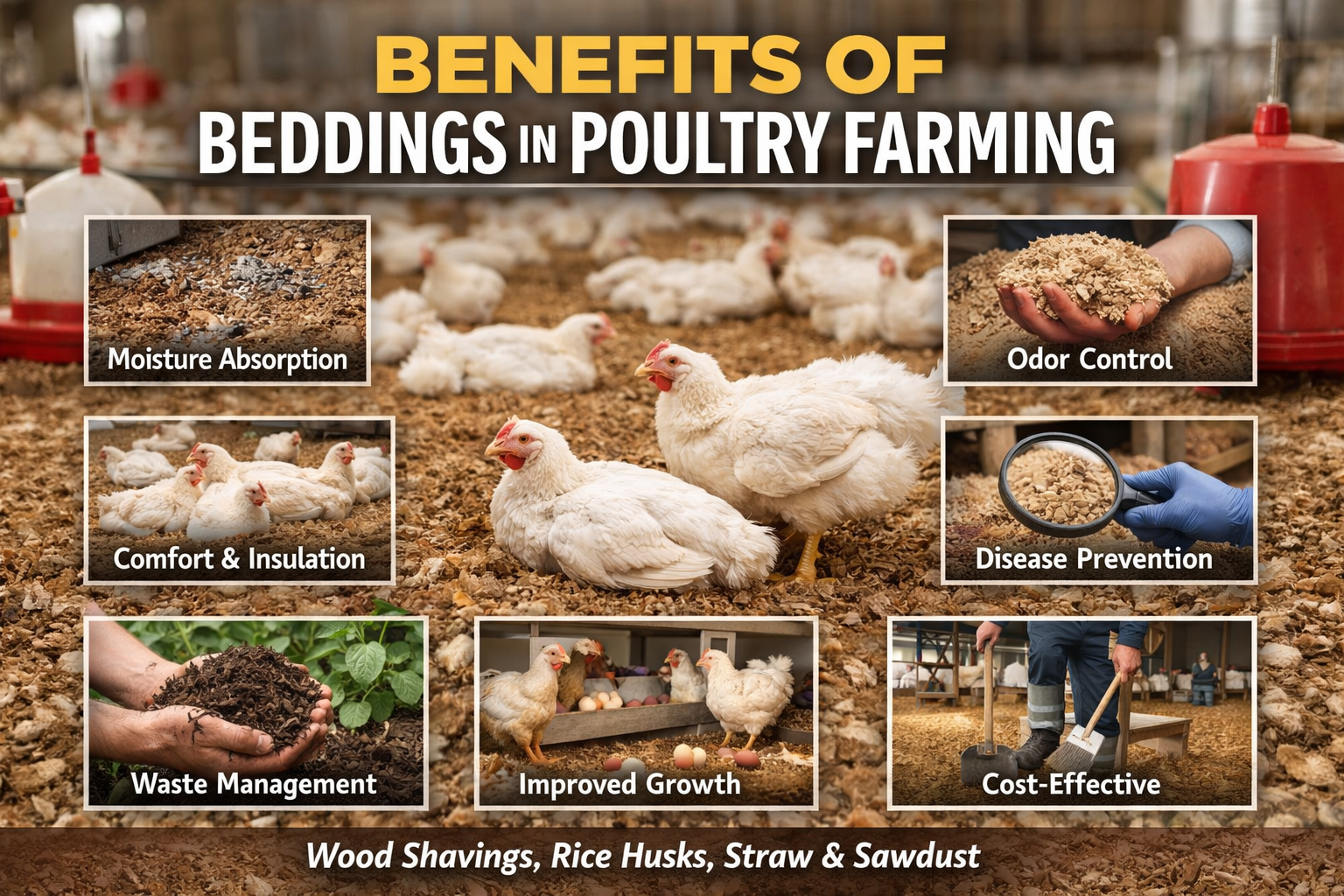
Perhaps the most vital function of bedding is its ability to absorb moisture from bird droppings and spilled water. Wet litter fosters the growth of harmful bacteria and releases ammonia, a corrosive gas detrimental to poultry health. Ammonia irritates the respiratory system, leading to reduced weight gain, poor egg production, and even increased mortality. Good bedding effectively keeps the floor dry, minimizing ammonia buildup and maintaining air quality.
2. Comfort and Insulation
Tap to continue reading the full article
Poultry Market Kenya
@poultrymarketkenya
Poultry Market Kenya is a dedicated poultry farming and agribusiness blog focused on empowering farmers, traders, and agri-entrepreneurs across Kenya. We publish practical, data-driven content covering poultry production, disease management, feeding strategies, housing, equipment reviews, and market insights. Our goal is to bridge the gap between traditional poultry farming practices and modern, profitable methods by providing reliable information, expert guidance, and real-world case studies.