Boosting Poultry Productivity in Kenya: A Professional Guide to Maximising Egg and Meat Output

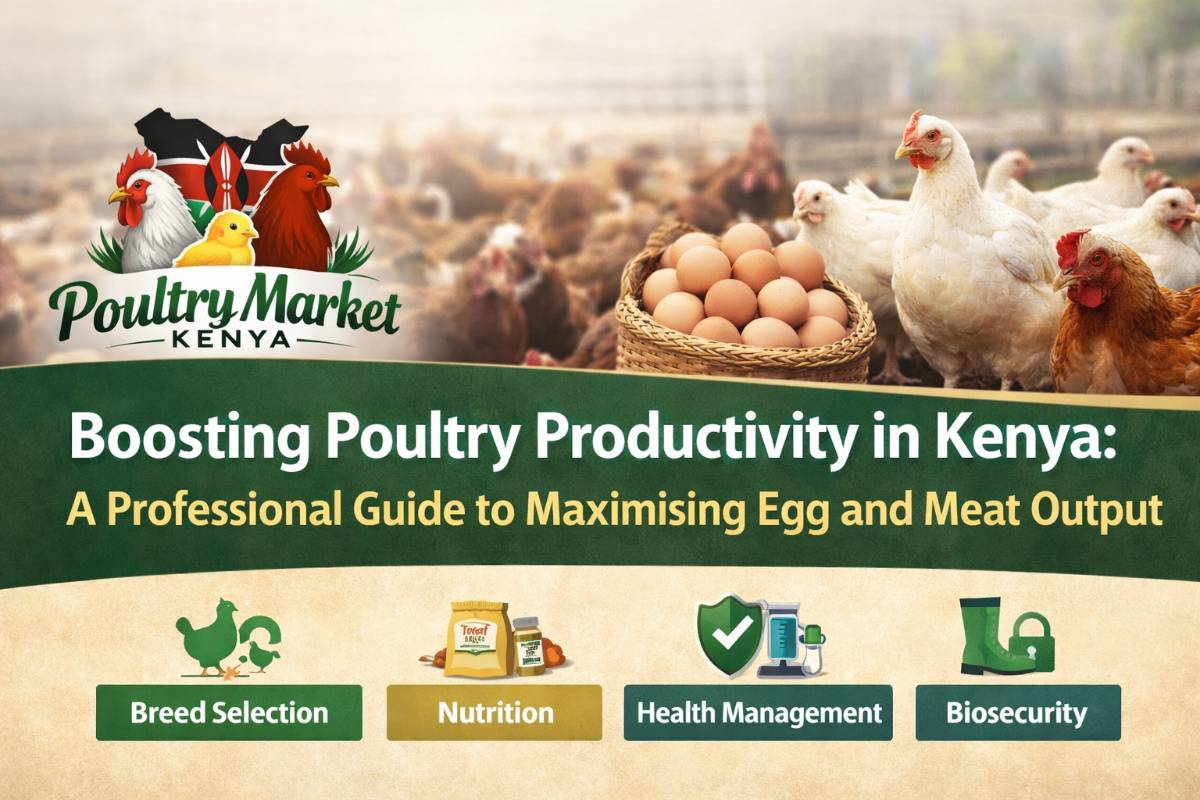
Boosting Poultry Productivity in Kenya: A Professional Guide to Maximising Egg and Meat Output
Introduction
Kenya has an estimated poultry population of over 31 million birds, with indigenous chickens making up 75–78% of the total[reference:0][reference:1]. However, domestic poultry production only meets around 60% of the country's demand for chicken meat and 50% for eggs, presenting a major opportunity for farmers who can optimise their operations[reference:2]. This guide outlines professional strategies to increase both egg and meat productivity, helping you turn poultry keeping into a thriving, profitable agribusiness.
Poultry farming is one of the most accessible livestock enterprises for smallholder farmers, youth, and women in Kenya[reference:3]. By implementing the strategies below—from breed selection and feeding to housing and vaccination—you can significantly improve your flock's output and income.
1. Choose the Right Breed for Your Goal
The foundation of productivity starts with genetics. Your choice of breed should align with your primary objective: egg production, meat production, or a combination of both.
For Maximum Egg Production (Layers)
- Commercial Hybrid Layers: Breeds like Bovans Brown, Lohmann Brown, or Hy-Line are highly specialised for egg production.
Tap to continue reading the full article
Poultry Market Kenya
@poultrymarketkenya
Poultry Market Kenya is a dedicated poultry farming and agribusiness blog focused on empowering farmers, traders, and agri-entrepreneurs across Kenya. We publish practical, data-driven content covering poultry production, disease management, feeding strategies, housing, equipment reviews, and market insights. Our goal is to bridge the gap between traditional poultry farming practices and modern, profitable methods by providing reliable information, expert guidance, and real-world case studies.